Most people do not stop tracking meals because they do not care about their health. They stop because it is tiring.
You have to remember what you ate, find the right entry, guess the portion, correct the details, and do it again at the next meal. It is manageable for a few determined days. Then life gets busy, dinner is takeaway, and the habit disappears.
I built FoodieTrack because I wanted a simpler way back in.
The goal was never perfect tracking
I did not want to build another place to obsess over every gram of food. I wanted something useful on a normal Tuesday—when you are rushing between work, family, training, and everything else.
FoodieTrack is there to help you notice patterns. Maybe you are eating less protein than you thought. Maybe the afternoon snack has quietly become a daily habit. Maybe you are doing better than you give yourself credit for.
That kind of awareness is more helpful than chasing a perfect log.
Make the small action easy
The idea is straightforward: logging a meal should take less effort than deciding to skip it.
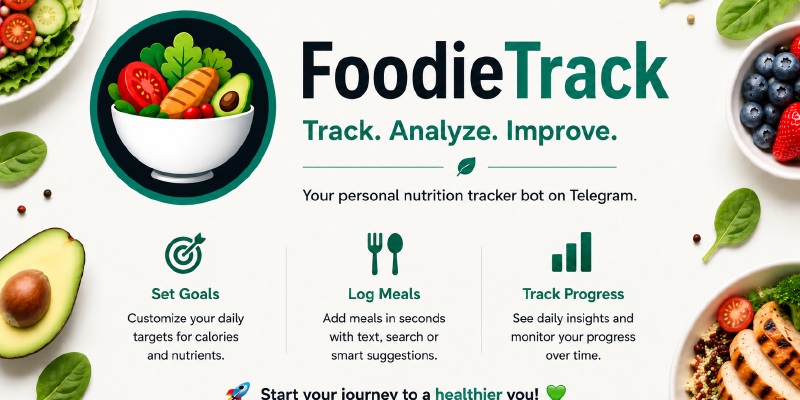
You can describe a meal in your own words, use a photo, or check a label when that is more useful. The point is not to turn eating into admin. It is to make a small record while the meal is still fresh in your mind, then get on with your day.
The less friction there is, the more likely the habit is to survive real life.
Built around ordinary food
Food does not always come in neat portions. It is hawker food, a shared dinner, something cooked at home, or a snack grabbed between meetings. There is always some uncertainty, and that is fine.
FoodieTrack is meant to be a practical guide, not a lab instrument. The numbers are estimates. What matters is using them consistently enough to understand the bigger picture over time.
A quieter approach to better habits
There is plenty of nutrition advice that asks for an all-or-nothing reset. FoodieTrack is not built around that.
Start by noticing. Add one meal. Check your day. Make the next decision with a little more context. That is enough.
I am still building FoodieTrack because I think the best tools are the ones that fit into your life quietly and earn their place there.
If that sounds useful, you can try it at FoodieTrack.
FoodieTrack provides estimates for general awareness. It is not medical advice or a substitute for personalised guidance from a qualified health professional.